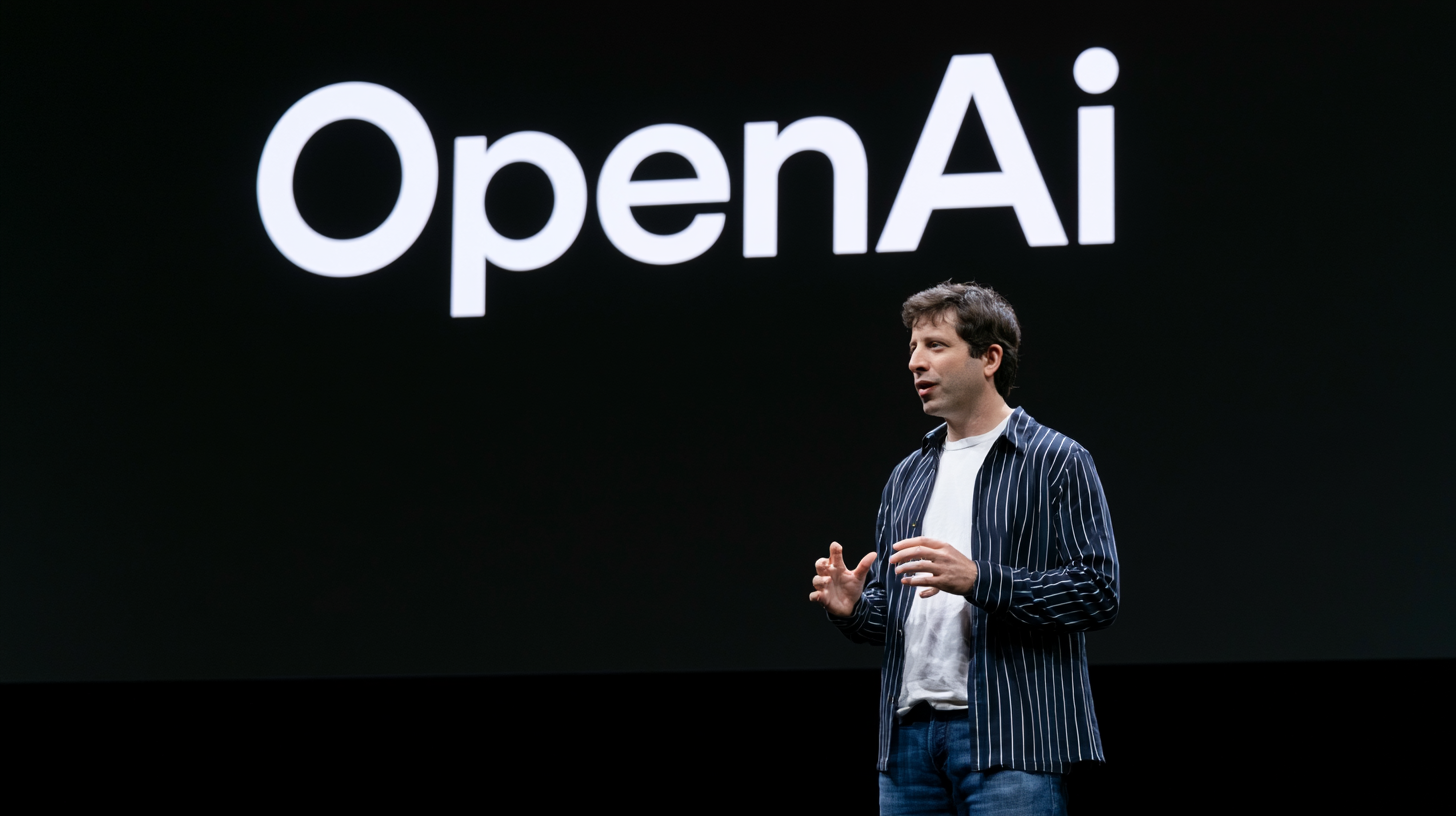

If you are watching Washington debate the equity structures of Silicon Valley, you are looking at the wrong scoreboard.
OpenAI proposed handing the federal government a 5% equity stake worth roughly $42.6 billion. The mainstream financial press is treating this as a revolutionary wealth-sharing breakthrough for the public. It is a brilliant corporate distraction.
While the headlines remain loud, everyday pre-retirees are watching their actual account balances stagnate. The gap between political theater and your real-world purchasing power is where capital gets systematically lost.
Here is the unvarnished breakdown of the machinery behind the AI wealth fund pitch, the physical supply chain driving these valuations, and the direct steps required to protect your savings.
Elon Musk did it again! After self-driving cars…
Reusable rockets that land themselves…
And brain chips that let paralyzed people control computers with their minds…
Elon just filed this patent (click here and see it for yourself) to protect his new invention…
A new form of AI so powerful he called it an "infinite money glitch."
And it could help send shares of this little-known Elon Musk supplier to the moon.
The Regulatory Smoke Screen
The $42.6 billion figure is tied directly to OpenAI's March funding round, which established a post-money valuation of $852 billion. CEO Sam Altman pitched a public sovereign wealth fund modeled after Alaska’s Permanent Fund directly to President Trump, Howard Lutnick, Scott Bessent, and Senator Bernie Sanders.
When a tech monopoly gets both sides of the political aisle to nod along, you need to examine the plumbing. This proposal is a preemptive regulatory shield designed to prevent antitrust intervention, not a guaranteed dividend check for your household.
[ THE REGULATORY SMOKE SCREEN ]
OpenAI Valuation: $852B ➔ Proposed Government Gift: 5% ($42.6B) ➔ Public Hype ➔ Buried 401(k) Leaks
The real risk for your retirement is the psychological misdirection. Every market cycle, a massive headline pulls retail investor attention toward speculative tech excitement. Meanwhile, the boring, quiet leaks—your expense ratios, unrated turnover costs, and layered account fees—keep compounding against you in the dark.
Also From the Desk: Core Briefings
 Arthur Callahan
 Arthur Callahan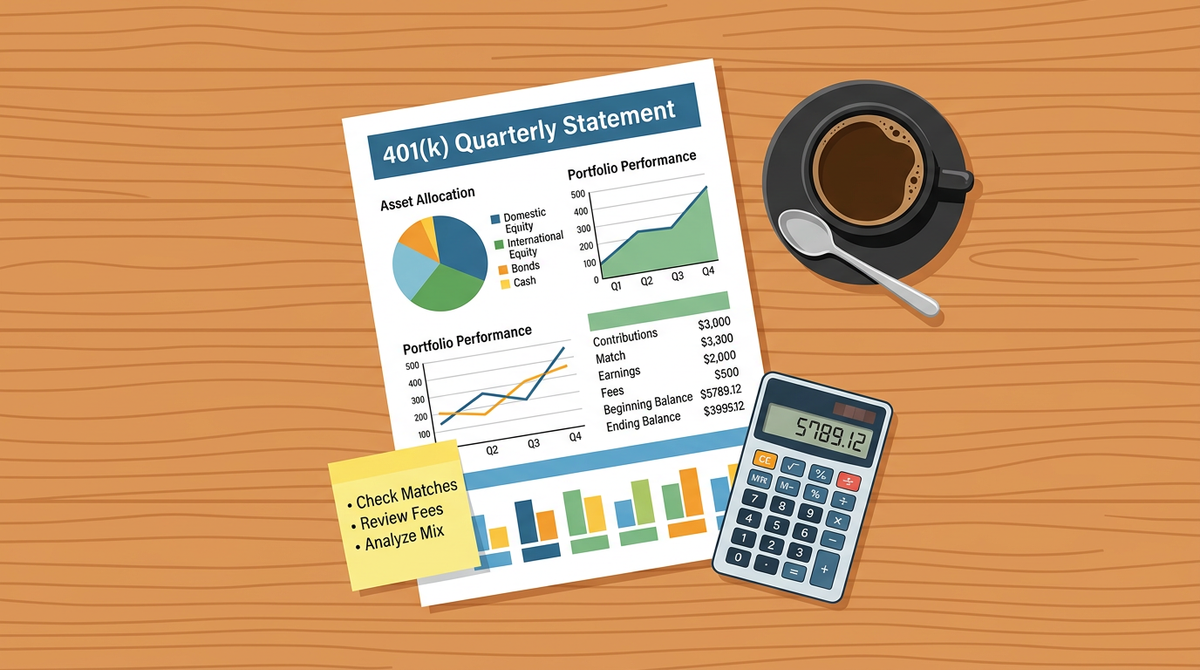
 Arthur Callahan
The Multi-Decade Timeline Illusion
The Alaska Permanent Fund model sounds enticing on cable news, but it took nearly fifty years of physical oil revenues to mature. For a pre-retiree aged 55 to 65, a theoretical, multi-decade AI dividend timeline is entirely useless.
You cannot afford to fund a secure retirement on a policy white paper that requires congressional approval. The immediate danger to your capital is the asset concentration hiding inside traditional target-date funds.
[ THE STRUCTURAL WEALTH GAP ]
Your Account Balance ➔ Minus Layered Expense Ratios ➔ Minus Tracking Errors ➔ Real-World Purchasing Power Loss
While you monitor the AI news, your fund manager is collecting layered administrative fees on page seven of your statement. If your 401(k) holds $300,000 and your all-in fee drag sits at 1.2% instead of 0.4%, you are leaking roughly $2,400 every single year. Over a 7-year horizon, that unexamined leak compounds into thousands of dollars of lost economic utility. No theoretical public fund is going to mail you a check to cover what internal fees are quietly siphoned away.
Tracing Valuations Back to the Loading Dock
I spent three decades in supply chain management. One rule is absolute: you can never trust a corporate valuation until you trace it back to the physical loading dock.
AI does not exist in an ethereal cloud. It lives inside high-density data centers that require massive electricity grids, cooling infrastructure, and specialized semiconductors. Today, July 2, 2026, the Trump administration pledged to take up to a 10% stake in chipmaker Intel to secure this exact infrastructure.
[ THE PHYSICAL CORE OF AI ]
Rare Mineral Mining ➔ Semiconductor Fab ➔ Data Center Power ➔ Diesel Logistics ➔ Real Capital Costs
When diesel prices, industrial concrete, and power grid utilities climb, the internal cash burn rate of these tech giants accelerates. If your retirement portfolio is heavily overweight in passive tech index funds, you are blindly absorbing this raw infrastructure risk. You are betting your nest egg on a speculative valuation that is completely dependent on volatile real-world commodity costs.
The 401(k) Savings Optimization Protocol
Do not wait for Washington to legislate an AI dividend check for your savings account. Take fifteen minutes this weekend to execute a structural rebalancing of your own perimeter.
| Account Element | Hidden Risk Factor | Corrective Direct Action |
| Tech-Heavy Index Funds | Extreme concentration risk tied to volatile physical input costs | Rebalance: Limit tech-cluster exposure to a maximum of 15% of total capital. |
| Bundled Target-Date Funds | Hidden fee-layering and unrated internal trading turnover costs | Optimize: Extract capital into lower-cost, unbundled component index options. |
| Mutual Funds with 12b-1 Fees | Marketing and distribution charges used to fund corporate advertising. | Liquidate: Switch to institutional-grade or clean share-class alternatives immediately. |
Examine the fine print on your latest statement. Identify the exact percentage points being extracted under the guise of asset management. If your all-in expense ratios exceed 0.50%, your capital is underperforming its real compounding potential.
Conclusion
The OpenAI sovereign wealth pitch is a spectacular corporate headline, but it is not a structural retirement plan. Inflation remains sticky, interest rates are high, and the financial industry is counting on your passivity to sustain its profit margins.
True capital protection requires looking past the Silicon Valley scoreboard, auditing the real dollar costs of your fund allocations, and eliminating high-turnover instruments. The institutional confetti will stop falling, but your fee structure compounds every single day.
Secure your perimeter.