
If you believe a record-breaking index milestone means the structural health of your retirement account is secure, you are misinterpreting market architecture.
Yesterday, June 29, 2026, the Dow Jones Industrial Average closed above 52,000 for the first time in financial history, gaining 306.63 points. Concurrently, the S&P 500 marched 1.18% higher to 7,440.43, and the Nasdaq Composite surged 2.07% to close at 25,820.14.
The mainstream financial press is treating this milestone as a universal victory for retail investors. It is not. A record index print and a structurally sound retirement portfolio are two entirely different concepts. One produces loud headlines; the other quietly bleeds capital through internal index rebalancing friction and severe sector concentration.
This rally was incredibly narrow, driven almost exclusively by tech momentum and a major index reshuffle. Here is the unvarnished macro analysis of the machinery behind the Dow's sprint to 52,000, the hidden transaction tax hitting passive index funds, and the structural reality of the market's latest milestone.
1. The Reconstitution Arbitrage: Alphabet vs. Verizon
The primary catalyst for Monday’s historic print was not sudden, widespread economic expansion. It was an institutional swap. Alphabet officially replaced Verizon in the Dow Jones Industrial Average, fundamentally shifting the index's sector weighting overnight.
Alphabet surged roughly 5% on its debut, pulling the price-weighted Dow higher by sheer mathematical momentum. This tech surge was amplified by the semiconductor space, with the sector ETF (SMH) jumping over 3%, fueled by individual sprints from Astera Labs (+16%), KLA (+12%), and Applied Materials (+11%).
[ THE MOMENTUM TURBINE ]
Alphabet Replaces Verizon ➔ GOOGL Surges 5% ➔ Semiconductors Jump 3%+ ➔ Tech Momentum Pulls Price-Weighted Index ➔ Dow Clears 52,000
While retail investors celebrate the 52,000 scoreboard, they are completely ignoring the internal friction of this index reconstitution. Every single passive index fund and ETF that tracks the Dow was forced to simultaneously liquidate millions of shares of Verizon and purchase Alphabet at its peak momentum premium.
This forced, synchronized rebalancing creates massive institutional transaction volume. These hidden costs—manifesting as bid-ask spread leaks and execution brokerage fees—are legally excluded from the headline expense ratio listed in a fund's prospectus. They are deducted directly from the Net Asset Value (NAV) of your fund. You are actively paying for Wall Street to rebalance its mega-cap casino.
2. Geopolitical Sugar Rushes and Sector Rotation
The secondary tailwind for yesterday's rally was a diplomatic pause. The United States and Iran agreed to a temporary cessation of hostilities, allowing commercial vessels to resume transit through the Strait of Hormuz.
From a logistics standpoint, this immediately lowers maritime insurance premiums, stabilizes short-term fuel cost projections, and reopens a corridor that handles 20% of global oil supply. However, institutional data indicates severe skepticism regarding the durability of this ceasefire. A tactical pause is not a permanent peace treaty.
Wall Street used this short-term geopolitical relief to aggressively bid up high-beta tech stocks, while defensive sectors—materials, utilities, consumer staples, and real estate—were completely left behind.
| Sector Category | Monday Performance | Structural Portfolio Impact |
| Mega-Cap Tech / Semi | Massive Outperformance | Driving the narrow index headline; highly volatile. |
| Defensive / Value Sectors | Distinctly Lagging | Underperforming the broader index print. |
| Passive Target-Date Funds | Muted Capital Appreciation | Heavily weighted in lagging defensive sectors; missing the tech surge. |
This extreme asymmetry is the core risk for pre-retirees. If your 401(k) is parked in a traditional target-date fund that automatically scales into defensive value sectors to minimize volatility, you did not participate in Monday's 306-point surge. Your portfolio watched the wave from the shore, yet you still absorbed the internal tracking errors and structural transaction fees triggered by the Alphabet swap.
3. The Velocity Warning: Four Milestones in 2026
The speed of this market cycle is historically unprecedented. It took the Dow a mere 20 trading days to sprint from 51,000 to 52,000—marking its fourth 1,000-point milestone in 2026 alone. This matches the hyper-velocity we witnessed during the 49,000-to-50,000 sprint back in February.
[ 2026 VELOCITY ARCHITECTURE ]
Feb 2026: Dow 50,000 ➔ ➔ ➔ June 29, 2026: Dow 52,000 (Fourth 1,000-point milestone of the year)
Velocity of this magnitude feels highly secure on the trajectory up, but the exact same mathematical leverage applies on the way down. When an index sets records in compressed timelines based entirely on a narrow cluster of tech equities, it creates a highly fragile framework.
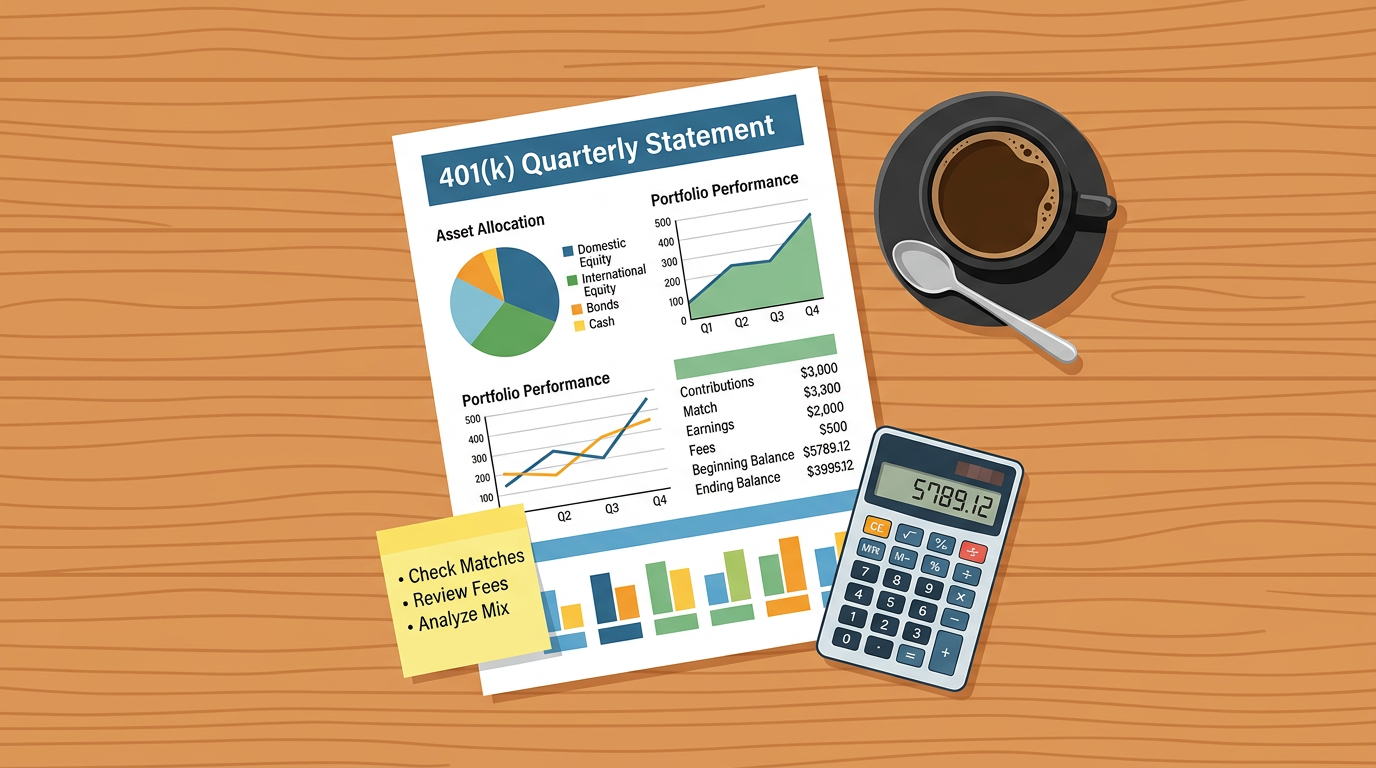
When markets run red-hot and asset balances look inflated on paper, retail investors stop reviewing their statements. They stop calculating the compounding damage of layered platform charges, administrative fees, and active fund underperformance. A 0.85% expense ratio on an underperforming, actively managed fund that is failing to match the benchmark index is a continuous leak of your real-world purchasing power. The difference between a legacy 0.85% fund and a modern 0.05% index alternative over a ten-year horizon on a $250,000 portfolio is over $20,000 in absolute capital.
Conclusion
The Dow clearing 52,000 is a spectacular headline, but it is not a structural retirement plan. The underlying data rows prove that this rally is narrow, heavily reliant on artificial index reconstitution adjustments, and propped up by a volatile geopolitical ceasefire that remains highly fragile.
Preserving capital in this macroeconomic environment requires discarding passive complacency. You cannot assume your portfolio is safe simply because the media is celebrating a record high. True capital preservation requires looking past the index scoreboard, auditing the real dollar cost of your fund allocations, and eliminating high-turnover instruments that siphon wealth through internal transaction friction.
The institutional confetti will stop falling, but your fee structure compounds regardless.
Secure your perimeter.