
If you are managing your capital under the assumption that a geopolitical headline pause translates into supply-chain stabilization, you are misreading the structural data.
The mainstream financial press spent the last 24 hours cheering the news that Washington and Tehran tentatively agreed to a tactical stand-down, with eyes turned toward rumored diplomatic talks in Doha. They want you to look at the surface-level reopening of the shipping lanes and conclude that the risk premium has evaporated.
It has not.
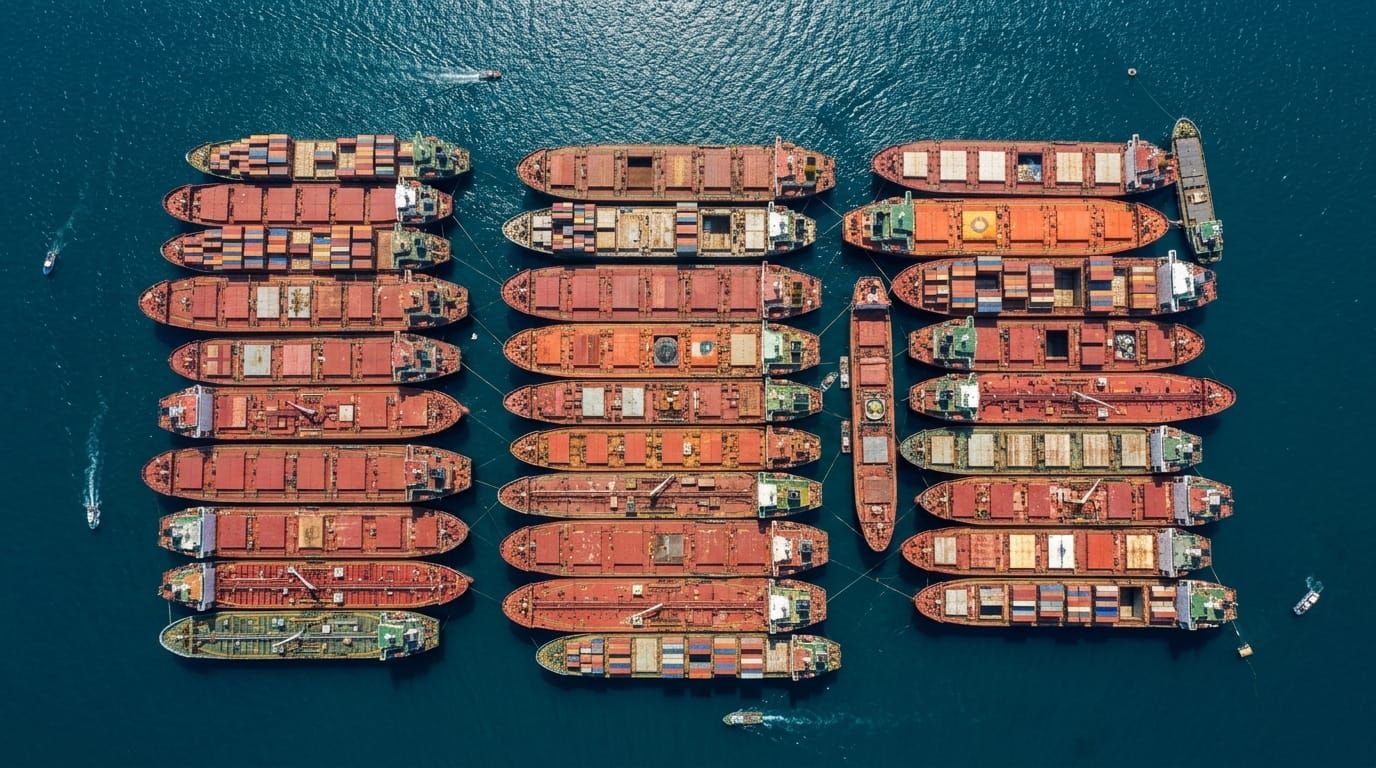
The reality on the water is far more volatile. Yesterday, June 30, 2026, the diplomatic narrative fractured as conflicting reports emerged regarding whether the Doha meetings were even officially scheduled. While a handful of commercial vessels are cautiously attempting transit through the Strait of Hormuz following last week's drone strike on a Singapore-flagged cargo ship, total crude and LNG throughput remains bottlenecked at roughly 50% of peacetime capacity.
I have analyzed the real-time marine tracking data alongside the global freight leasing markets. What is happening right now is a masterclass in structural asymmetry. The shipping lanes are half-open on paper, but closed in practice—and the resulting dislocation is triggering an invisible tax on passive retail portfolios.
Here is the unvarnished breakdown of the global tanker arbitrage, the compounding lag on domestic refined products, and how your target-date fund is quietly absorbing the damage.
After taking SpaceX public in the biggest IPO ever…
Elon Musk is already working with a NEW startup that’s growing faster than Tesla…
Faster than SpaceX…
And faster than any of Elon Musk’s previous ventures.
Click here to get the name completely free of charge…
And I’ll also show you how to claim a stake for as little as $50.
The Wall Street Journal called this startup “the front-runner in the race for artificial-intelligence supremacy.”
So if you didn’t get a chance to get into SpaceX before it went public…
This could be your next big opportunity.
Click here now because Bloomberg has just confirmed that…
This startup is moving towards “a blockbuster IPO.”
And if you act now…
When the company goes public…
It could be the biggest payout of your life.
We have so much to look forward to,
Jeff Brown
Founder & CEO, Brownstone Research
The Asymmetric Freight Seesaw: VLCCs vs. Product Tankers
The mainstream financial media is currently screaming that energy inflation is cooling because Very Large Crude Carrier (VLCC) daily earnings on the bellwether Middle East-to-China route just collapsed by 43%—plummeting from over $500,000 to roughly $287,000 per day. Turn up the BS Meter on this interpretation.
This rate drop is not a sign of economic normalization. It is a symptom of extreme localized overcapacity.
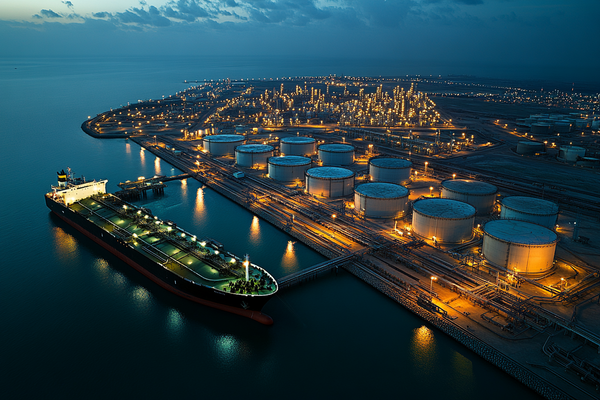
When the temporary stand-down was announced, hundreds of empty ultra-large tankers immediately rushed back into the Persian Gulf to secure positions ahead of actual cargo availability. You have too many hulls competing for too few immediate loading allocations at major terminals like Saudi Aramco's Ras Tanura. Rates for big ships crashed because the market became temporarily oversupplied with empty steel, not because the underlying geopolitical risk has been resolved.
Meanwhile, look at the other side of the ledger that Wall Street is ignoring:
[ THE STRUCTURAL FREIGHT SEE-SAW ]
VLCC Empty Fleet Inflow ➔ Gulf Overcapacity ➔ VLCC Spot Rates Drop 43%
       │
       └───➔ Product Tanker Scarcity Elsewhere ➔ Nigeria-to-Europe Rates Spike 78% ($112K/day)
Because the global mega-fleet congested the Persian Gulf perimeter, smaller product tankers moving refined fuel from Nigeria to the Netherlands suddenly experienced acute structural scarcity. Those freight rates silently skyrocketed 78%, moving from $63,000 to over $112,000 per day.
This means that while unrefined crude shipping looks cheaper on paper today, the actual cost of transporting refined fuel—diesel, gasoline, and heating oil—has drastically accelerated globally. Because US import structures rely on these international refined product benchmarks, the domestic retail fuel supply chain is absorbing an elevated baseline that will keep terminal shelf prices sticky for months.
The Supply Chain Tourniquet and the Duration Trap
The structural damage from a half-clogged chokepoint does not clear the moment a few tankers clear the horizon. Hundreds of vessels remain out of position. Many operators are maintaining extended alternative routes around the Cape of Good Hope, which triples the transit distance on core trade lanes, burns massive amounts of marine fuel, and locks up global container capacity.
This creates a rolling lag that directly targets corporate profit margins. When maritime insurance syndicates maintain elevated war-risk premiums due to the lack of a verified, durable treaty, those operational expenses are systematically pushed down the corporate ladder:
$$\text{Elevated War-Risk Premium} \rightarrow \text{Sticky Freight Surcharges} \rightarrow \text{Higher Manufacturer Input Costs} \rightarrow \text{Compressed Equity Margins}$$
Major domestic transport and manufacturing entities cannot immediately shed these costs. They are locked into freight surcharges on a 60-to-90-day structural delay. Consequently, the input costs for consumer staples, heavy industrial goods, and retail inventories will remain artificially inflated through the end of Q3, completely insulated from the daily fluctuations of headline crude spot prices.
The Target-Date Wealth Drain
The true destination for these accumulated structural inefficiencies is the passive asset allocation framework inside your retirement account.
Most employer-sponsored 401(k) plans rely on automated Target-Date Funds (TDFs). These funds are legally bundled packages that blindly hold broad equity index sleeves alongside fixed-income instruments. When a structural shock like the Hormuz disruption hits the global logistics network, a traditional target-date fund exposes your capital to a dual-vector drain:
- Hidden Turnover Friction: As energy sector volatility swings, active sub-advisors within these bundled funds engage in rapid, automated rebalancing. Every single trade triggers bid-ask spread costs and internal execution brokerage fees that are legally excluded from the headline "Expense Ratio" listed on page one of the prospectus.
- The Squeezed Equity Drag: While a target-date fund may hold direct energy majors that capture short-term speculation spikes, it simultaneously holds massive positions in consumer discretionary, industrial, and retail equities that are absorbing the margin compression of sticky diesel and freight surcharges.
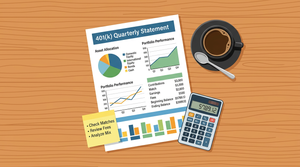
The nominal balance on your quarterly statement does not provide a breakdown of this internal tracking error. It prints a single summary number, obscuring the fact that your capital is holding the downside of a macro squeeze while the financial institution collects its administrative percentages regardless of fund performance.
The Backhaul Portfolio Allocation Blueprint
Preserving purchasing power while key global shipping lanes are weaponized requires a definitive pivot away from passive, unexamined index holding.
| Portfolio Element | Structural Exposure to Hormuz Risk | Corrective Rebalancing Strategy |
| Bundled Target-Date Funds (TDFs) | High: Blindly holds broad market caps exposed to supply-chain margin compression and hidden turnover fees. | Deconstruct: Break apart bundled TDF allocations into lower-cost, direct component index funds with known weightings. |
| Unhedged Logistics / Consumer Staple Equities | Severe: Profit margins are directly exposed to the 60-to-90-day refined product freight rate lag. | Underweight: Trim exposure to high-volume, low-margin operations that cannot pass down freight surcharges. |
| Short-Duration Treasury Allocations | Zero: Completely insulated from physical maritime disruption; captures current yield without asset risk. | Overweight: Maintain as a liquid defensive buffer while the global logistics perimeter recalibrates. |
Conclusion
The Strait of Hormuz being half-open is not a recovery; it is an unhedged operational liability. The divergence between collapsing raw crude freight and exploding refined product transport costs proves that the global supply chain is experiencing deep structural friction that a political press release cannot fix.
Leaving your life savings on automated pilot while the global energy architecture undergoes structural debasement is an explicitly high-risk approach. You cannot dictate Iranian drone deployments or Saudi terminal operational capacities, but you can control your vulnerability to high-fee, high-turnover passive funds that absorb the damage of global bottlenecks without your explicit consent.
The data rows on the water do not lie, and they do not wait for Wall Street to update its marketing brochures.
Secure your perimeter.
— Arthur Callahan
The Backhaul Report